
How Do You Know When a Work of Art Is “The One”?
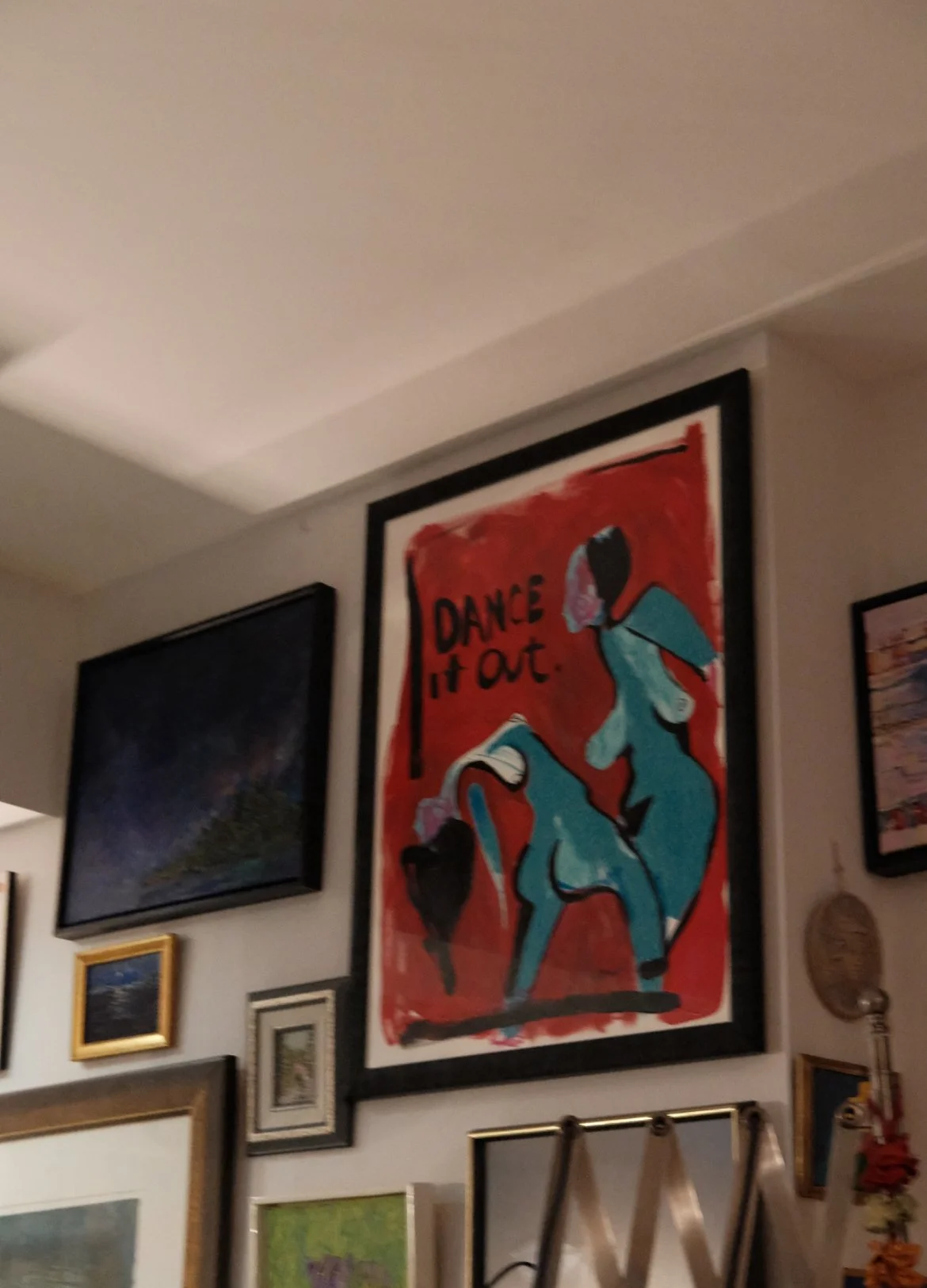
Cabbagetown Home, featuring “Boogie” by Stephanie Baron
For a long time, I could not settle on the artwork that belonged in the upper-right corner of the wall behind my sofa.
It is not the most obvious place to hang a statement piece, yet it has always felt important to me. From the entrance, that corner is one of the first glimpses into the room. It acts almost like a prelude - an introduction to the mood of the space and to everything that follows. I tried several works there. Some were beautiful on their own, some matched the room perfectly, some stayed for a few weeks or a few months before I moved them elsewhere. But none of them felt entirely right.
Then I came across Boogie by Stephanie Baron, it caught my eye immediately.
I had been searching, perhaps without fully realizing it, for a work that was figurative and abstract at the same time. I wanted movement, spontaneity and colour. Most of all, I wanted a piece that pulsed with energy. Boogie had all of it. Its figures feel free and uninhibited. The work does not simply depict movement; it feels alive with it. As soon as I placed it in that corner, I knew.
It has remained there ever since.
The painting now sets the tone for the entire living room. Its expressive figures and vivid colours make the space feel open, warm and inviting. It carries many of the qualities I am naturally drawn to: movement, rhythm, colour and the feeling of being fully present in a moment. It was an intuitive choice, but also a thoughtful one. That combination is often how we recognize a work of art as “the one.”
The feeling often comes before the explanation

Texas Home, featuring vintage artwork acquired through Curio Atelier
When people begin looking for art, they often feel pressure to make a rational decision. Will it match the sofa? Is it the right size? Does it fit the style of the room? Is it a sensible investment? Will other people understand it? These are all valid considerations, but they rarely explain why one particular work stays in our minds.
Sometimes the connection arrives before we have the words for it. We notice that we keep returning to the same image. We look at it longer than the others. We close the page, then open it again. We begin imagining where it could live. The attraction may come from a colour, a gesture, a face, a landscape or a sense of mystery that is difficult to name. Something in the work feels familiar, even when we have never seen anything quite like it before.
That first response matters.
It is not shallow or uninformed. It is often the beginning of understanding what we are truly drawn to.
Looking helps us recognize our own intentions

Installation Image from “The Poetry of the Ordinary”
Finding “the one” does not always happen instantly. Sometimes it emerges through repeated looking.
The more art we see, the more clearly we begin to notice patterns in our own responses. We discover that we are drawn to certain colours, materials, subjects or emotional qualities. We may realize that we prefer work that feels quiet and contemplative, or, in my case, work that carries movement, rhythm and expressive energy.
Looking also helps us separate what we genuinely love from what we believe we are supposed to love.
A work may be fashionable, technically impressive or perfectly suited to a current interior trend, but still leave us unmoved. Another may initially seem unusual or unexpected, yet continue to occupy our thoughts. This is where intention becomes useful.
Instead of asking only, “Does this match my room?” we can ask:
What do I want this space to feel like?
What kind of energy do I want to encounter every day?
Do I want this work to calm the room, challenge it, brighten it or introduce a sense of mystery?
What am I already drawn to, even if I cannot fully explain why?
In my living room, I did not simply need an artwork that fit an empty corner. I needed something that introduced the spirit of the room. Once I understood that, Boogie made perfect sense.
“The one” does not have to be the obvious choice
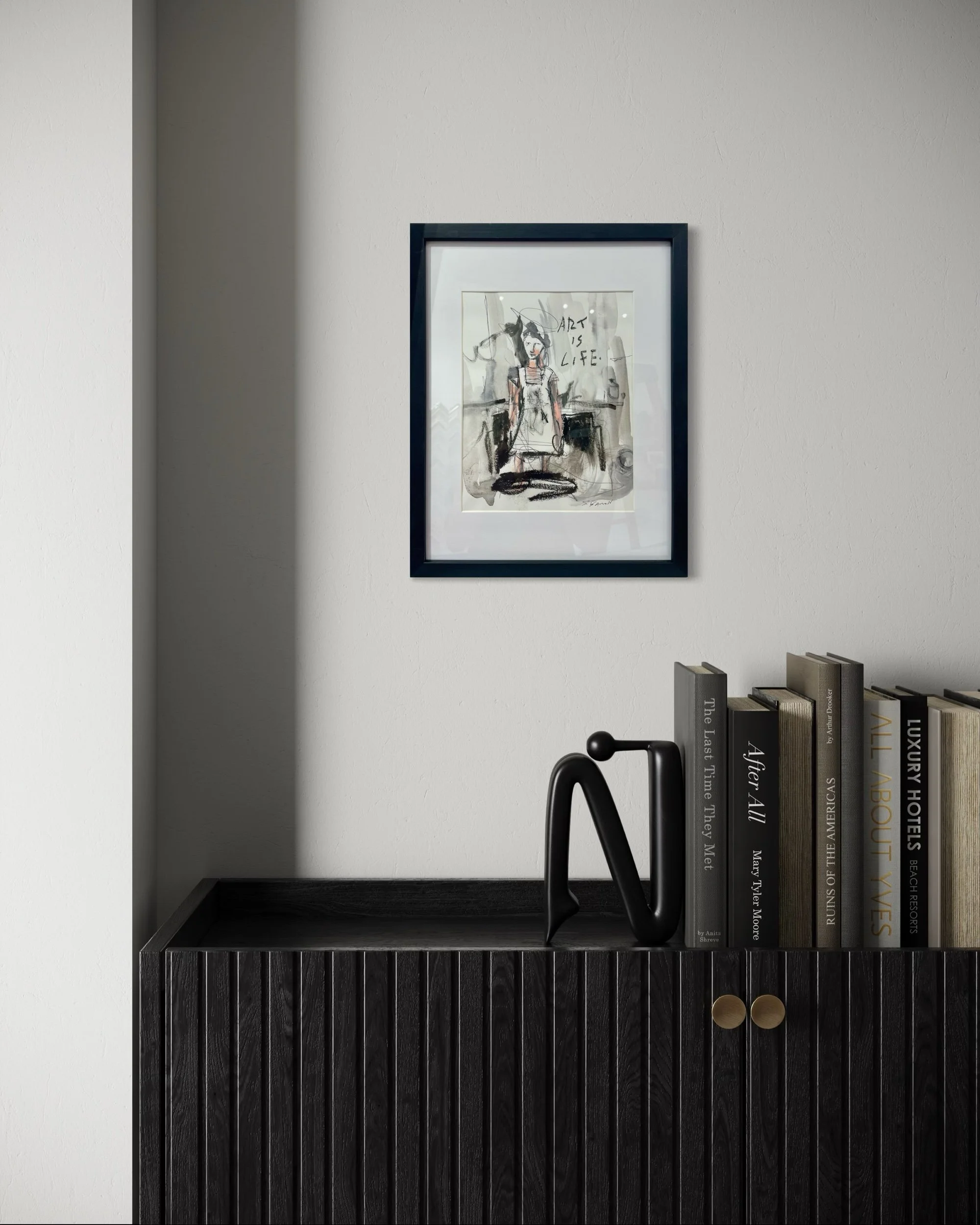
Stephanie Baron (American)
Mixed media on paper
The right artwork may not be the largest, most expensive or most conventionally impressive piece available.
It may be a small work that changes the feeling of an entire wall. It may be something that contrasts with the rest of the room rather than coordinating with it. It may be a piece you did not expect to like. Sometimes the most meaningful choice is the one that brings a new energy into your home.
Art does not always need to complete a room neatly. It can interrupt it, loosen it or make it feel more personal. A home becomes memorable through these moments of individuality.
Imagine living with it
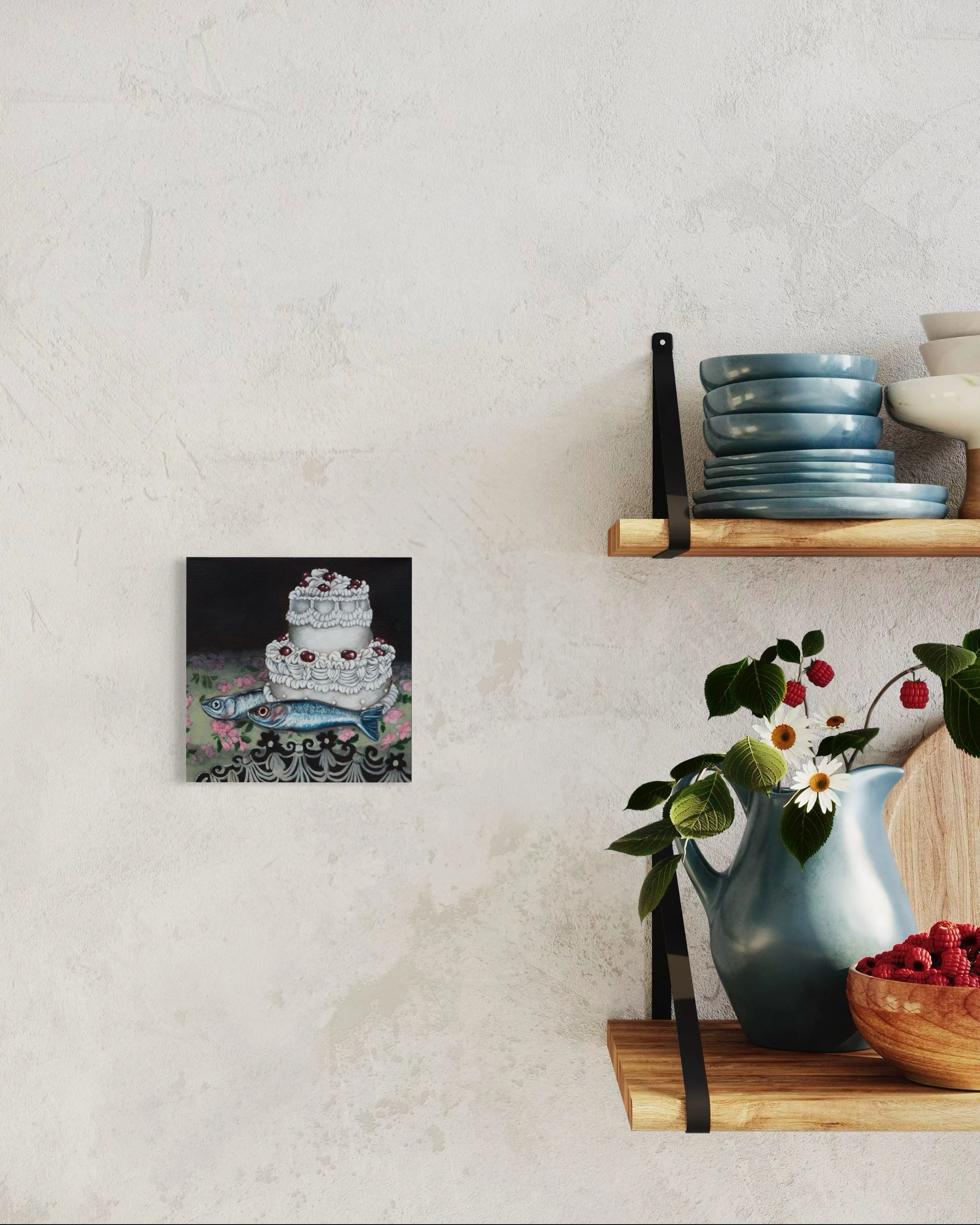
Laura Thipphawong (Toronto)
Oil on Canvas
One of the most useful questions to ask is not simply whether you like a work, but whether you can imagine developing a relationship with it.
Can you picture seeing it in morning light? Would you still want to look at it after the initial excitement passes? Does it leave something unresolved, something that may reveal itself slowly over time?
The works we live with become part of the rhythm of our daily lives. We see them while talking with friends, reading, resting, celebrating or moving through ordinary routines. Over time, they gather memories and associations. The connection deepens because the work becomes part of our own story. That is why choosing art is different from choosing decoration. Decoration may support a room, but a meaningful artwork can participate in your life.
Trust both instinct and thought
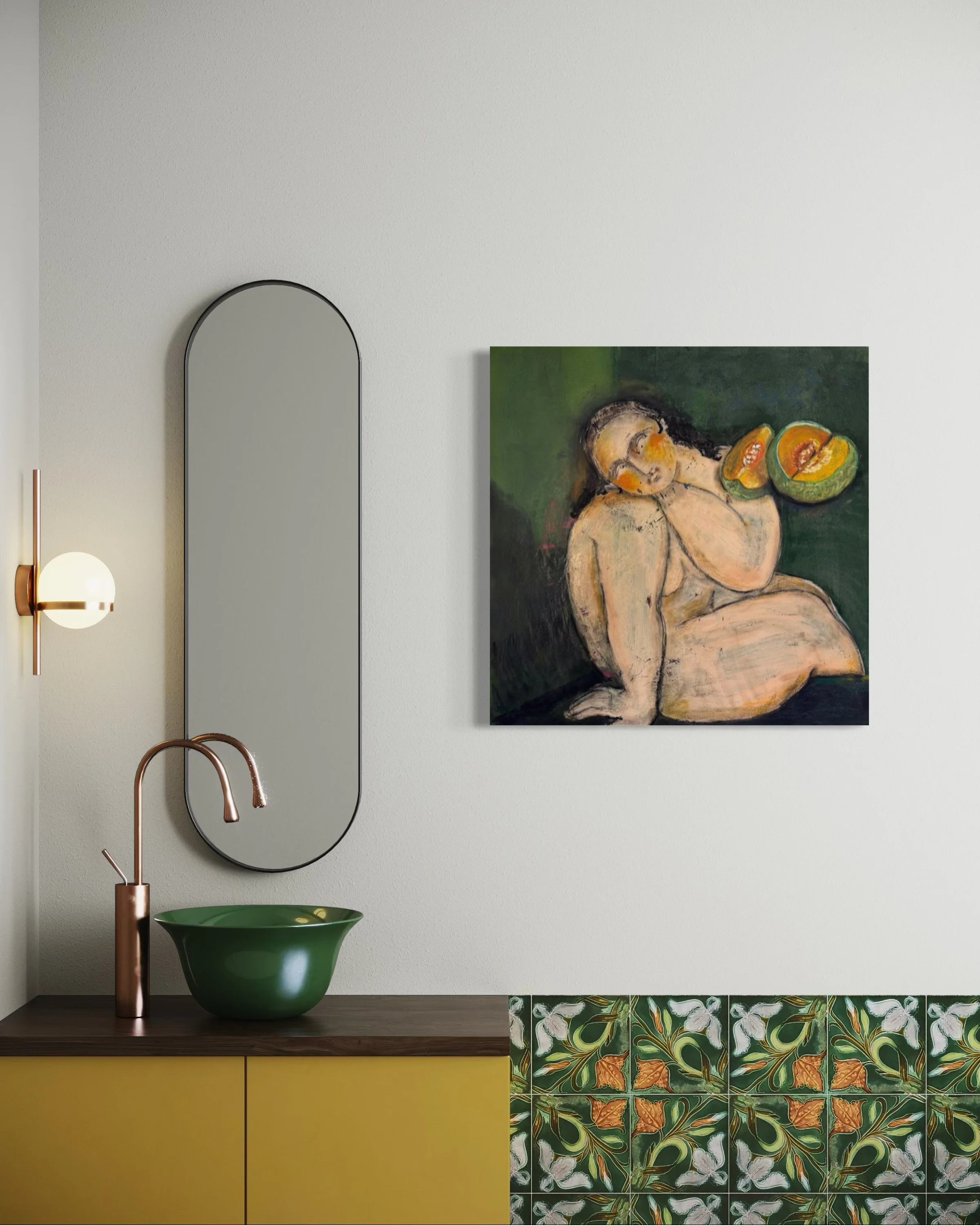
Shadi Majlessi (Toronto)
Mixed media on wood
Choosing art does not have to be purely emotional or purely practical. The most satisfying decisions often hold both.
Your instinct tells you that a work matters. Thought helps you understand how it may live in your space - its scale, placement, framing, light and relationship to the works around it. You can feel an immediate connection and still take time to consider the decision. You can ask questions, request additional photographs, view a work in person or create a digital room mockup.
Thoughtfulness does not diminish intuition. It gives intuition a place to land.
How Curio Atelier helps collectors find “the one”
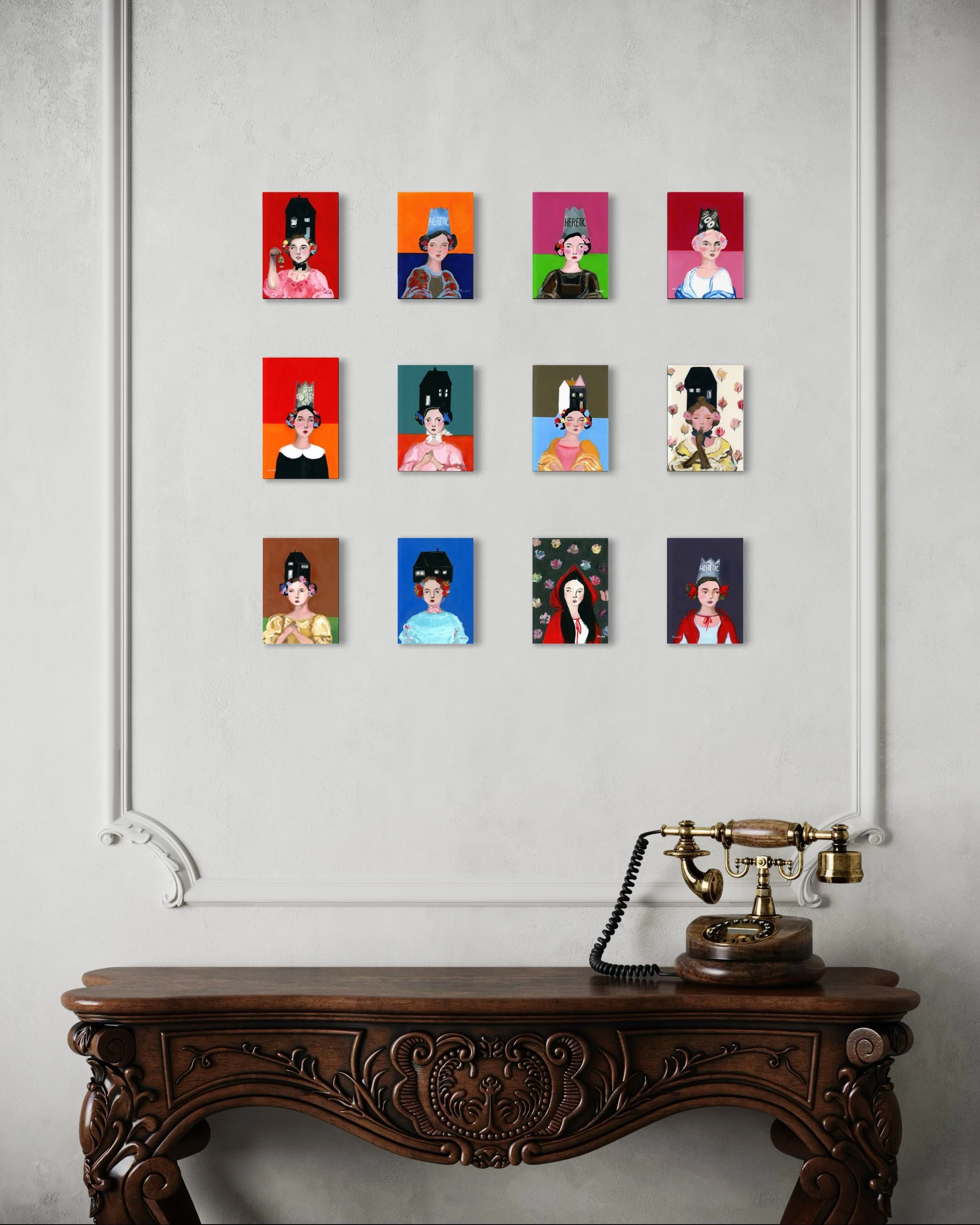
Alexandra Swistak
A collection of tiny portraits
At Curio Atelier, we believe collecting should feel personal rather than intimidating. Our role is not to tell collectors what they should like. It is to help them notice what they are already responding to.
Sometimes that begins with a conversation. Sometimes it begins with a photograph of an empty wall, a work that has stayed in someone’s mind, or a few words describing how they want a room to feel. From there, we can help clarify those instincts and introduce works that may resonate - whether through colour, subject, mood, scale, movement or story. We can also help with the practical side of the decision: viewing additional details, understanding dimensions, considering placement, creating a room visualization.
Finding the right artwork is rarely about filling a space as quickly as possible. It is about looking with attention, understanding your intentions and remaining open to the moment when a work suddenly feels unmistakably yours.
Sometimes “the one” is the piece you have been searching for.
Sometimes it is the piece that helps you finally understand what you were searching for all along.