
Herb & Dorothy Vogel, and the Quiet Power of Passionate Collecting
How two New York civil servants live with art richly
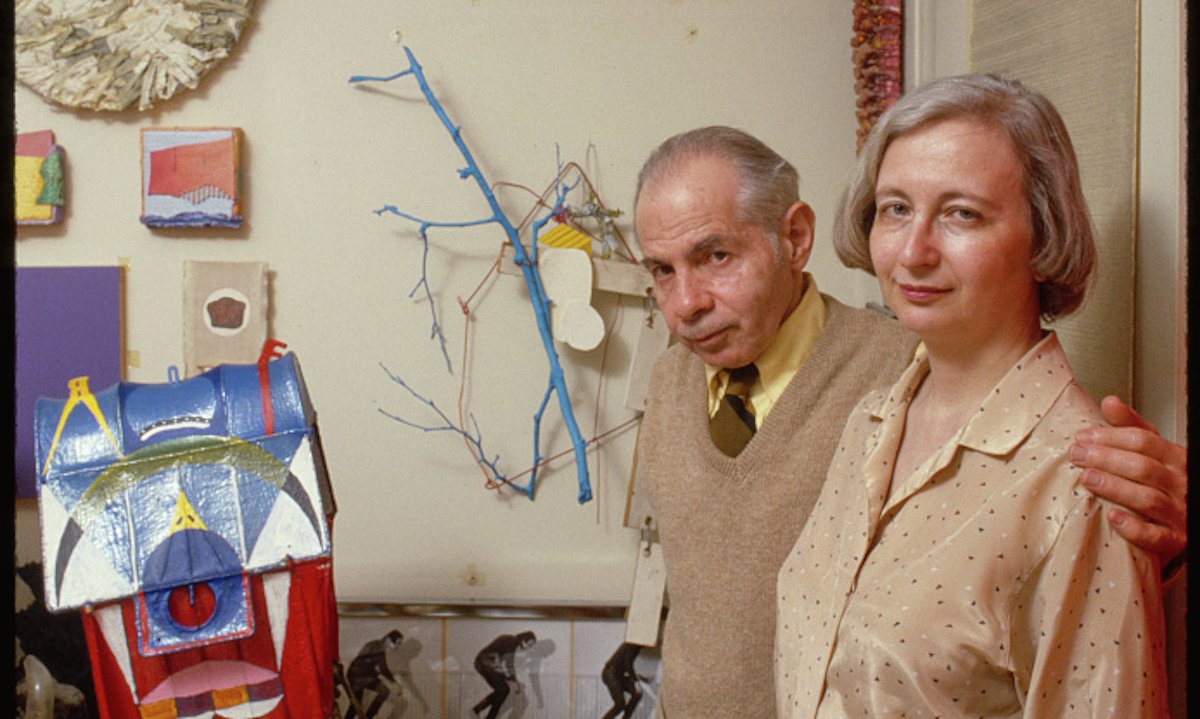
In November 2025, Dorothy Vogel passed away at the age of 90.
In the weeks since, the art world has been revisiting the story of Dorothy and her husband Herb – two quiet New Yorkers whose tiny apartment and modest salaries somehow became home to one of the most significant collections of minimalist and conceptual art in the United States. Their faces have been appearing again in obituaries, National Gallery essays, and radio segments: Dorothy, the librarian; Herb, the postal clerk; shelves and sofas overflowing with drawings, canvases, and sculptures.
I’ve been thinking about them a lot – and about what their story means for a small place like Curio Atelier, where so much of our work is about helping people begin, or deepen, a life with art on very human terms.
Two civil servants, 4,000 artworks, one small apartment

Herb and Dorothy married in 1962. She worked days at the Brooklyn Public Library; he worked nights sorting mail. They weren’t wealthy, they didn’t have a sprawling home, and they weren’t born into the art world. But they made a decision that shaped the rest of their lives:
They would live on Dorothy’s salary.
They would use Herb’s salary entirely to buy art.
They set themselves a few simple rules:
Works had to be affordable on civil-servant incomes.
They had to be small enough to carry home and to fit in their rent-controlled one-bedroom apartment.
Whenever possible, they bought directly from artists, often early in their careers.
Over decades, they quietly assembled more than 4,000 works – eventually 4,782 – by artists who now define post-1960s American art: Sol LeWitt, Lynda Benglis, Donald Judd, Richard Tuttle and many others. They lived among the works: stacked in closets, under the bed, lining every wall of their apartment, until there was barely room for anything else. They never treated art as an investment portfolio. They didn’t sell pieces to upgrade their lifestyle. They simply kept looking, kept buying, and kept living shoulder-to-shoulder with the art they loved.
A collection given away

In 1992, the Vogels did something almost unimaginable in today’s market-driven art world: they donated their entire collection to the National Gallery of Art in Washington, DC. They chose the National Gallery for very specific reasons:
Admission is free.
The museum doesn’t sell donated works.
They wanted the art to belong to the public, not to disappear into private vaults.
Later, they worked with the National Gallery to launch “The Dorothy and Herbert Vogel Collection: Fifty Works for Fifty States” – a project that distributed 2,500 works to museums and institutions across all 50 U.S. states. They could have sold and retired comfortably. Instead, they treated the collection as something to be shared – a living archive of relationships with artists, not a stack of assets.
Why their story feels so close to what we’re doing
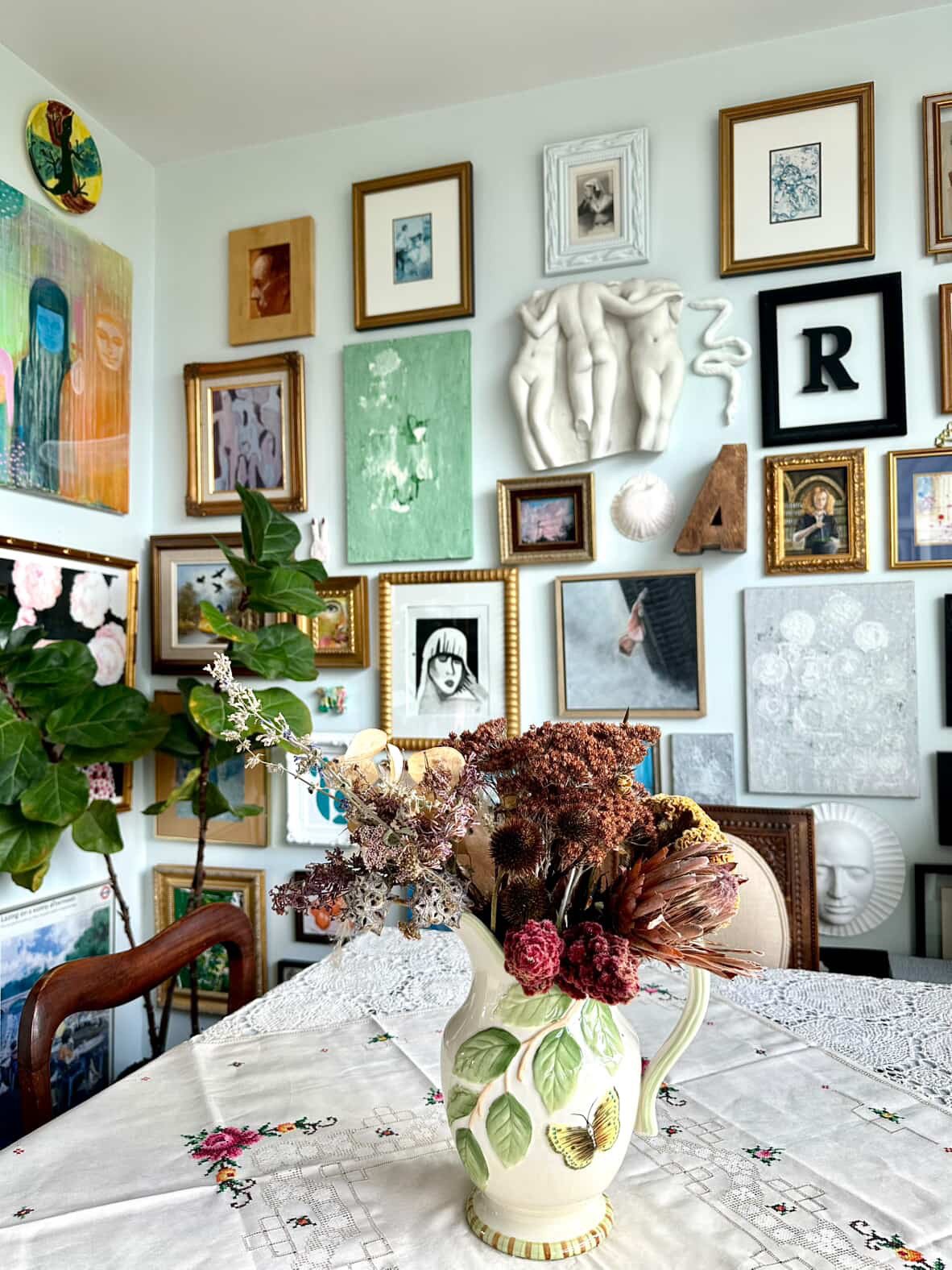
Midtown Toronto Home, image courtesy of Mariana Silveira, @the_decor_studio, artwork by Amy Thomson acquired through Curio Atelier
Curio Atelier exists on a very different scale, but the Vogel story touches the heart of what we care about: ordinary people building extraordinary relationships with art. A few things I keep coming back to:
1. You don’t have to be rich to be serious
Herb and Dorothy were described as “proletarian art collectors” – civil servants who simply chose to prioritise art.
For many of the people we work with, this looks like:
Choosing one original work instead of another piece of disposable décor.
Saving slowly and buying thoughtfully, rather than assuming collecting is “for someone else.”
Letting a collection grow one piece at a time.
The Vogels remind us that seriousness is not about budget; it’s about attention and commitment.
2. Early belief can change an artist’s life
Most of the artists they collected were not famous when the Vogels first bought their work. Their belief came early, quietly, and often in small amounts. That’s very close to what happens when someone acquires a work through Curio Atelier from an emerging or under-recognised artist. It’s not just a purchase; it’s a vote of confidence that can buy time, materials, and emotional room for the next piece to be made.
3. Art is meant to be lived with
There’s something beautiful about the image of that overfull New York apartment – art on every surface, in the way, part of daily life. Most of us won’t fill every closet with paintings (our storage situations and partners may protest), but the principle holds: art becomes most powerful when it’s woven into the everyday – by the kitchen table, above the sofa, next to the bed.
At Curio Atelier, this is really what we’re helping people do: not just buy art, but live with art.
A different kind of legacy
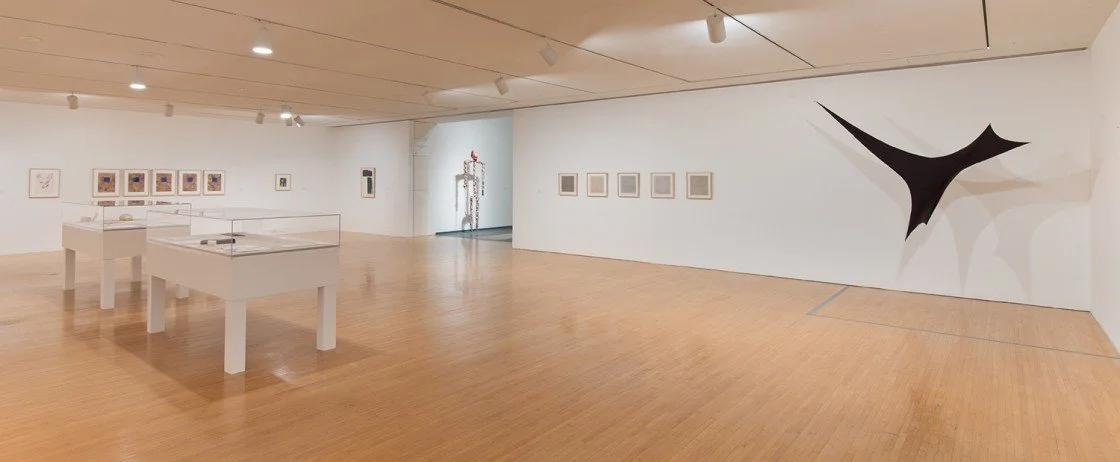
Installation view of The Dorothy and Herbert Vogel Collection: Fifty Works for Fifty States at MOCA, February 10 – March 11, 2013 at MOCA Grand Avenue, courtesy of The Museum of Contemporary Art, Los Angeles, photo by Brian Forrest
As obituaries and tributes for Dorothy appear – from the National Gallery of Art to major newspapers and radio – they all return to the same core image: two people of modest means, using what they had to support artists and surround themselves with work they loved. That, to me, is the kind of legacy worth aspiring to on any scale.
Curio Atelier will probably never steward 4,000 works into a national museum. But if we can help a handful of people build collections that feel deeply personal, thoughtful, and sustaining, and help a circle of artists keep making the work only they can make, then we’re walking, in our own way, a little bit in Herb and Dorothy’s footsteps.
And maybe that’s the quiet power of passionate collecting: not the headlines, not the valuations, but the simple, radical choice to let art move into your life and stay.
References & further reading
National Gallery of Art – “How Herb and Dorothy Vogel Built One of the Greatest Collections of Minimalist and Conceptual Art”
The Washington Post – “Dorothy Vogel, unlikely art collector and National Gallery donor, dies at 90”
National Endowment for the Arts – The Dorothy and Herbert Vogel Collection: Fifty Works for Fifty States(catalogue and program overview)
Documentary film – Herb & Dorothy (2008), dir. Megumi Sasaki