
Basel Miami 2025: What It Whispered to Us at Curio Atelier
What a mega-fair can teach us about small, joyful, lived-with art.
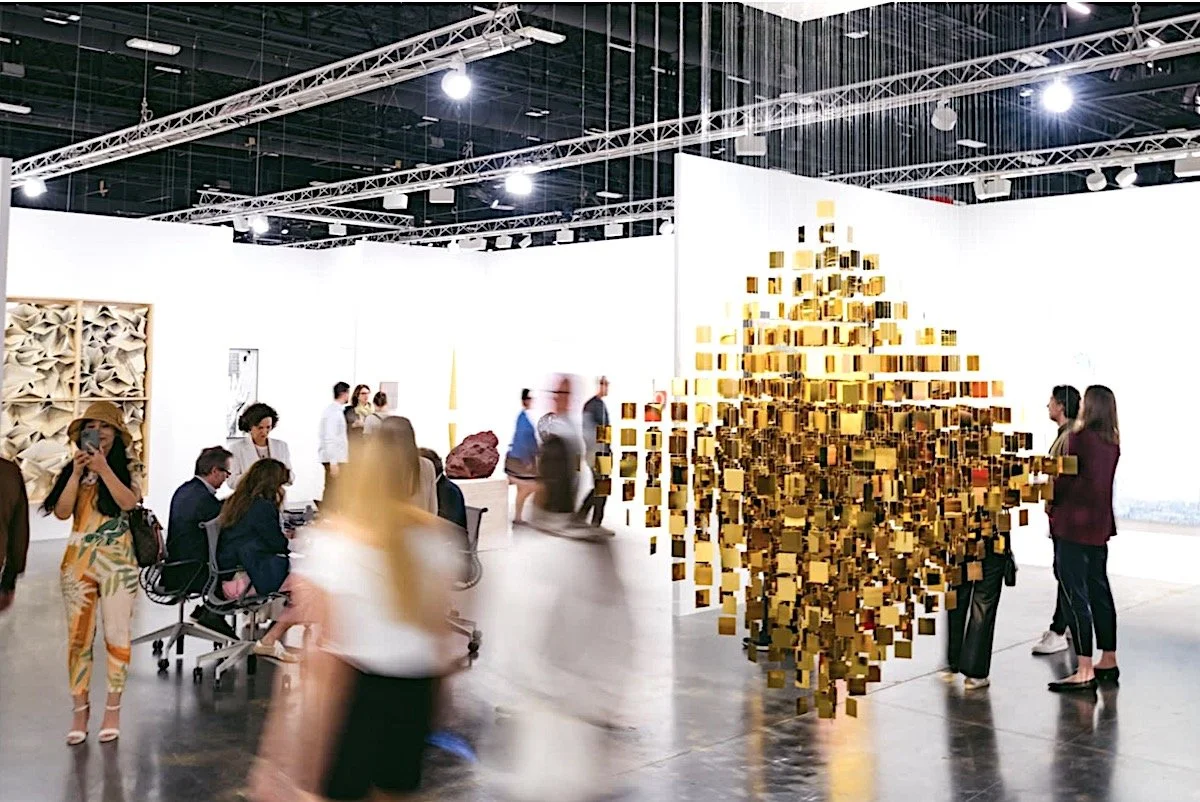
Courtesy of Art Basel Miami Beach
Art Basel Miami always looks loud from the outside: sunshine, big booths, bigger names, and plenty of spectacle. But if you look past the glitter, you start to notice quieter patterns - what galleries are really betting on, what collectors are leaning toward, and where the conversations are headed next.
Basel Miami 2025 felt, to me, like a confirmation of something we’ve been quietly building at Curio Atelier: a shift toward story-rich, human-scale, emotionally honest art. The kind of work that doesn’t need to shout to hold your attention.
Basel in brief (without the FOMO)
This year’s fair brought together hundreds of galleries from around the world, plus a whole ecosystem of satellite fairs like NADA and Untitled. On one end, there were the usual blue-chip moments: tiny masterpieces at eye-watering prices, major museum names, and big sales on opening day. But just as important were the sections and smaller fairs focused on emerging artists and younger galleries. That’s where a lot of the real energy was: fresh work, riskier ideas, and collectors willing to slow down, ask questions, and get to know the artists’ stories.
If you’ve ever felt that Basel is “not for you,” this quieter layer is the part that matters most for us.
1. Emerging artists aren’t the side room anymore
PHOTO KEVIN CZOPEK/BFA.COM
Across the fair and its satellites, early-career and mid-career artists weren’t treated as an afterthought. Their work wasn’t tucked away behind the big names—it was given its own spotlight, with curators, advisors, and collectors spending real time there (see NADA/Untitled market reports in the sources below).
That is exactly the terrain Curio Atelier lives in.
At Curio Atelier, we focus on artists who may not yet be household names, but whose practice is grounded, thoughtful, and evolving. Basel’s emphasis on this tier sends a clear message:
The future of contemporary art is being shaped in these “in-between” spaces, not only at the very top.
For our collectors, that’s encouraging. You don’t need to shop in the millions to participate in meaningful, serious collecting. You just need to be early, attentive, and curious.
2. Territory, land, and belonging are at the center
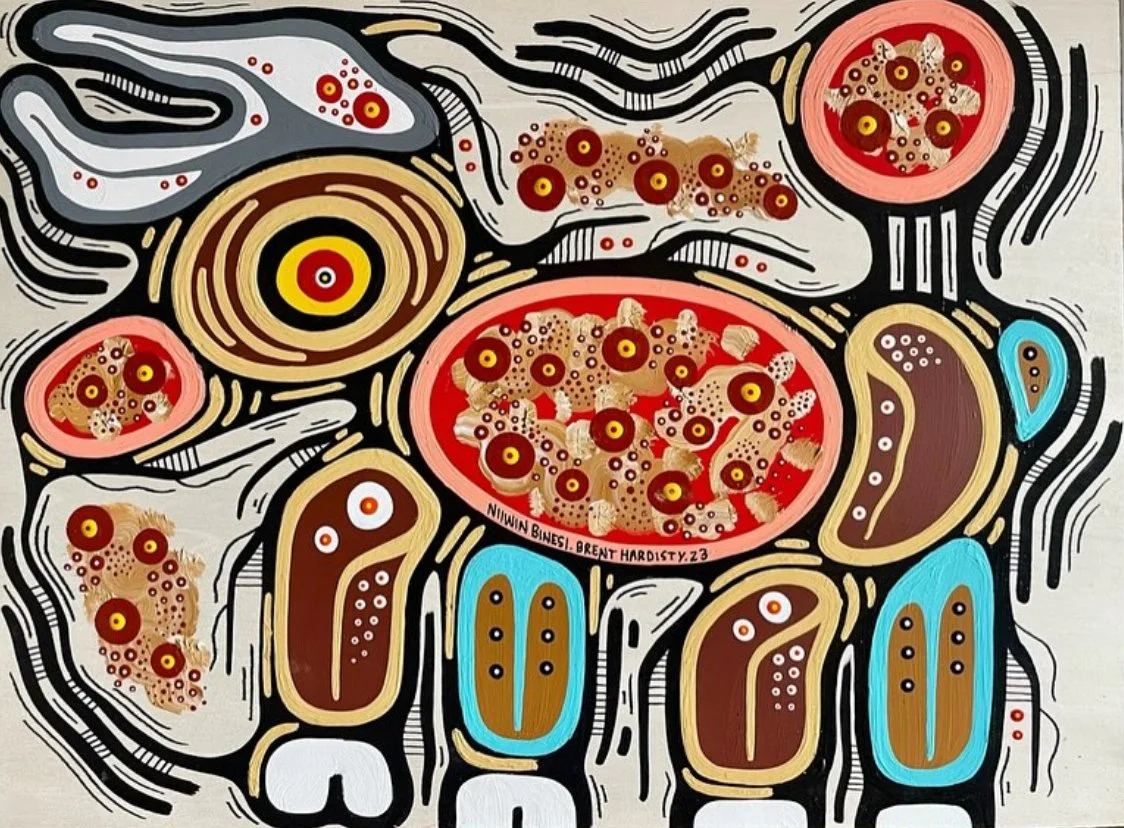
Brent Hardisty (Toronto, B. 1989)
Acrylic on Wood Panel
Another strong thread in Miami this year was a focus on place: land, migration, home, climate, shelter. Exhibitions launched alongside the fair, like the territory-focused show at El Espacio 23, brought together works dealing with displacement, colonial histories, borders, and the changing environment (see sources below).
These ideas didn’t just appear in landscape paintings. They showed up in colours, textures, recurring characters, maps that look like ghosts, and small everyday objects that quietly carried entire histories.
This feels deeply aligned with the types of practices we’re drawn to at Curio Atelier:
artists who move between countries, languages, and cultures
works that carry heat, humidity, light, or northern cold in their palettes
paintings and drawings where homes, plants, animals, and daily rituals hold memory
For us, these aren’t “trendy themes”, they’re lived realities. Many of the artists we work with are navigating immigration, mixed heritage, or layered senses of home. Basel simply confirmed that these stories are central to contemporary art right now, not a niche corner.
3. Joy and intimacy as serious subject matter
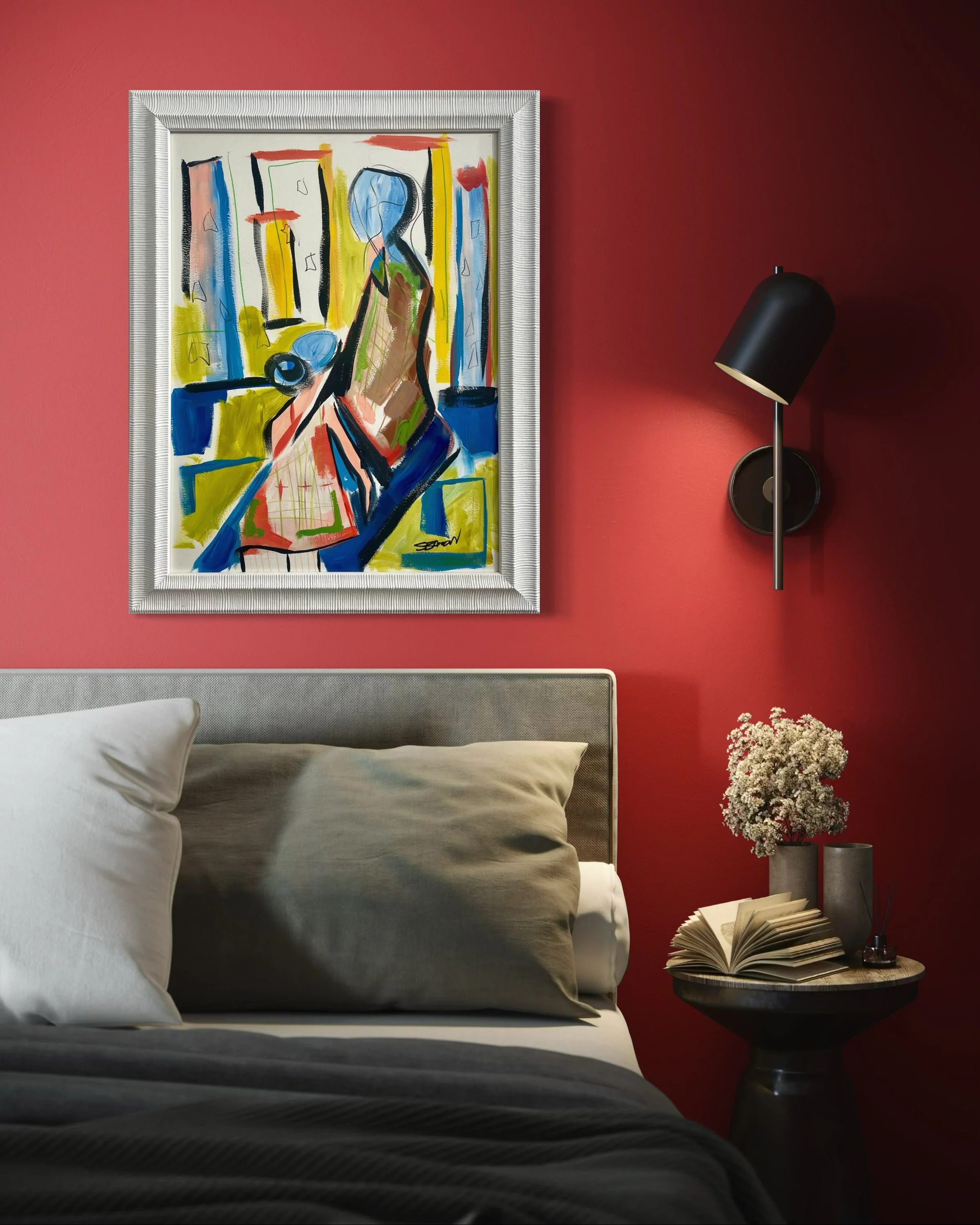
Stephanie Baron (American)
Mixed Media on Paper
Alongside the heavier themes, there was also a noticeable turn toward small, intimate, joyful works: scenes of family, friendship, domestic rituals; portraits that felt tender rather than grand; bright palettes that held both humour and complexity (see fair coverage in the sources below).
In other words: art that looks like it belongs in a home, not just a museum lobby.
This is where Curio Atelier feels most at ease. We love:
paintings of gatherings, meals, siblings, everyday gestures
works that celebrate softness, playfulness, and ordinary magic
small to mid-sized pieces you can live with, return to, and grow alongside
It’s reassuring to see a major fair validating what many of us already feel instinctively: that care, warmth, and joy are not lesser topics, they’re quietly radical in a world that can feel heavy.
4. The mid-market is alive and well
Reports from Miami pointed to something practical but important: the mid-price range - the works that aren’t blue-chip trophies, but also aren’t entry-level prints - is active and healthy. At fairs like NADA and Untitled in particular, many of the meaningful sales were happening at price points accessible to committed but not ultra-wealthy collectors (see market reports in the sources below).
That’s exactly the space Curio Atelier is intentionally built for.
We focus on:
original works (not mass-produced editions),
by artists with strong voices and long-term potential,
at prices that allow you to build a collection slowly and thoughtfully.
Seeing this segment thriving in Miami reassures us that our “lane” is not a compromise, it’s a vital part of the ecosystem. It’s where relationships are built, risks are taken, and new stories enter the art world.
What this means for Curio Atelier going forward
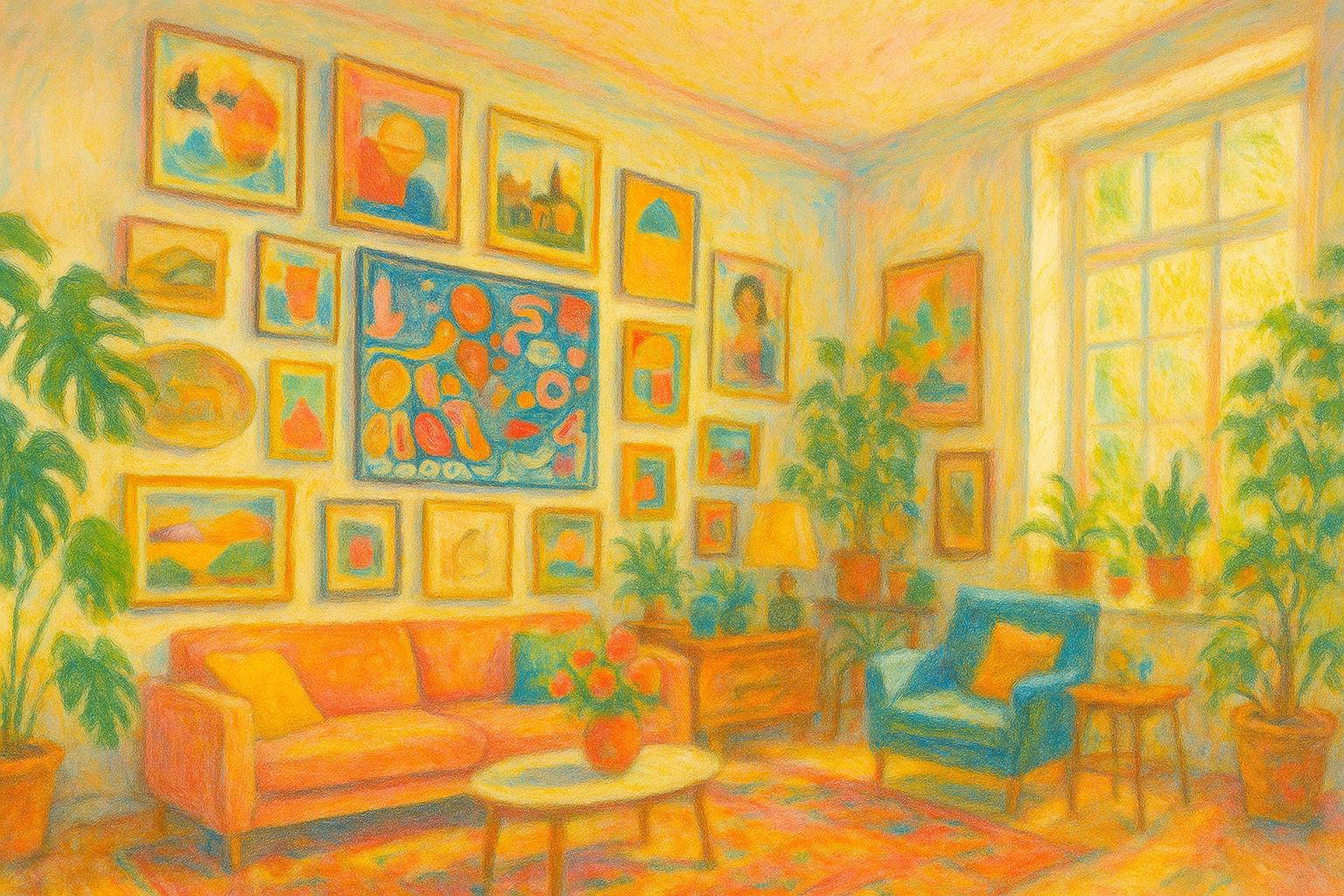
Basel Miami doesn’t dictate what we do at Curio Atelier, but it does act like a weather report. Here’s how it will shape our work in the coming year:
We’ll keep centering emerging and under-recognized artists whose practices could comfortably sit in those “young gallery” sections of a fair, even if they’re not there yet.
We’ll lean further into narratives of place, migration, and belonging, working with artists who hold multiple geographies inside them.
We’ll continue to champion intimate, joy-filled, domestic scenes as serious, contemporary subject matter—because they are.
We’ll stay rooted in the mid-market, helping collectors find pieces that feel both emotionally meaningful and financially realistic.
If Basel Miami 2025 felt distant or intimidating from your Instagram feed, I hope this reframes it a little. Many of the most important shifts happening there are the same ones we’re already nurturing - quietly, locally, and person to person.
You don’t need a VIP pass to be part of this conversation. You just need a bit of curiosity, some wall space, and a willingness to bring home a work that keeps speaking to you over time. That’s where Curio Atelier comes in.
Sources & further reading
Art Basel Miami Beach 2025 – Essential guide
Official overview of sectors, participating galleries, and the fair’s positioning.Art Basel Miami Beach 2025 – Press dossier
Press materials outlining the structure of the fair and its ambitions in the Americas.“Art Basel Miami Beach 2025: Your First Look at the Citywide Takeover” – Anarchy Daily
Citywide snapshot of exhibitions, institutional shows, and how Miami Art Week builds around Basel.“This San Francisco marvel is 2 inches tall. You can buy it for $15 million” – San Francisco Chronicle
On the tiny 1938 Frida Kahlo miniature offered at Art Basel Miami Beach 2025 - a useful reference for how value and scale intersect.“Steady Sales and Strong Work Fuel Emerging and Mid-Tier Market Rebound at NADA and Untitled Art” – ARTnews
Focused look at the emerging and mid-tier markets during Miami Art Week, with examples from NADA and Untitled.“In Miami, NADA and Untitled Art Test the Temperature of the Mid-Tier and Emerging Markets” – Observer
Read on collector behaviour and confidence in the mid-price range.“What Downturn? At NADA Miami, Dealers Report Strong Early Sales” – Artnet News
Early sales report showing demand for emerging artists and confirming activity in the mid-market.“Fair Trade: The Untitled and NADA Miami Report” – BmoreArt
On-the-ground reflections from NADA and Untitled, including pricing, booth strategies, and collector energy.“A World Far Away, Nearby and Invisible” – El Espacio 23 press release (via Business Wire / Morningstar)
Outlines the concept and themes of the territory-focused exhibition launched during Miami Art Week.Local coverage of El Espacio 23’s territory exhibition – Axios Miami, Artburst Miami
Short and longer-form pieces on how the exhibition approaches land, belonging, and environmental concerns.